Realm of Karitha - Multiplayer Game Revival
A multiplayer game project being revived as the flagship showcase for NextGame's discovery infrastructure. Now being strategically rebuilt with an infrastructure-first approach.


Realm of Karitha is a multiplayer game project that serves as the flagship demonstration for NextGame's discovery infrastructure. Originally developed from 2021-2023, the project teaches a crucial lesson: building great games for broken discovery ecosystems leads to failure. Now being strategically revived with an infrastructure-first approach, Karitha represents what's possible when games are designed for discoverability from day one.
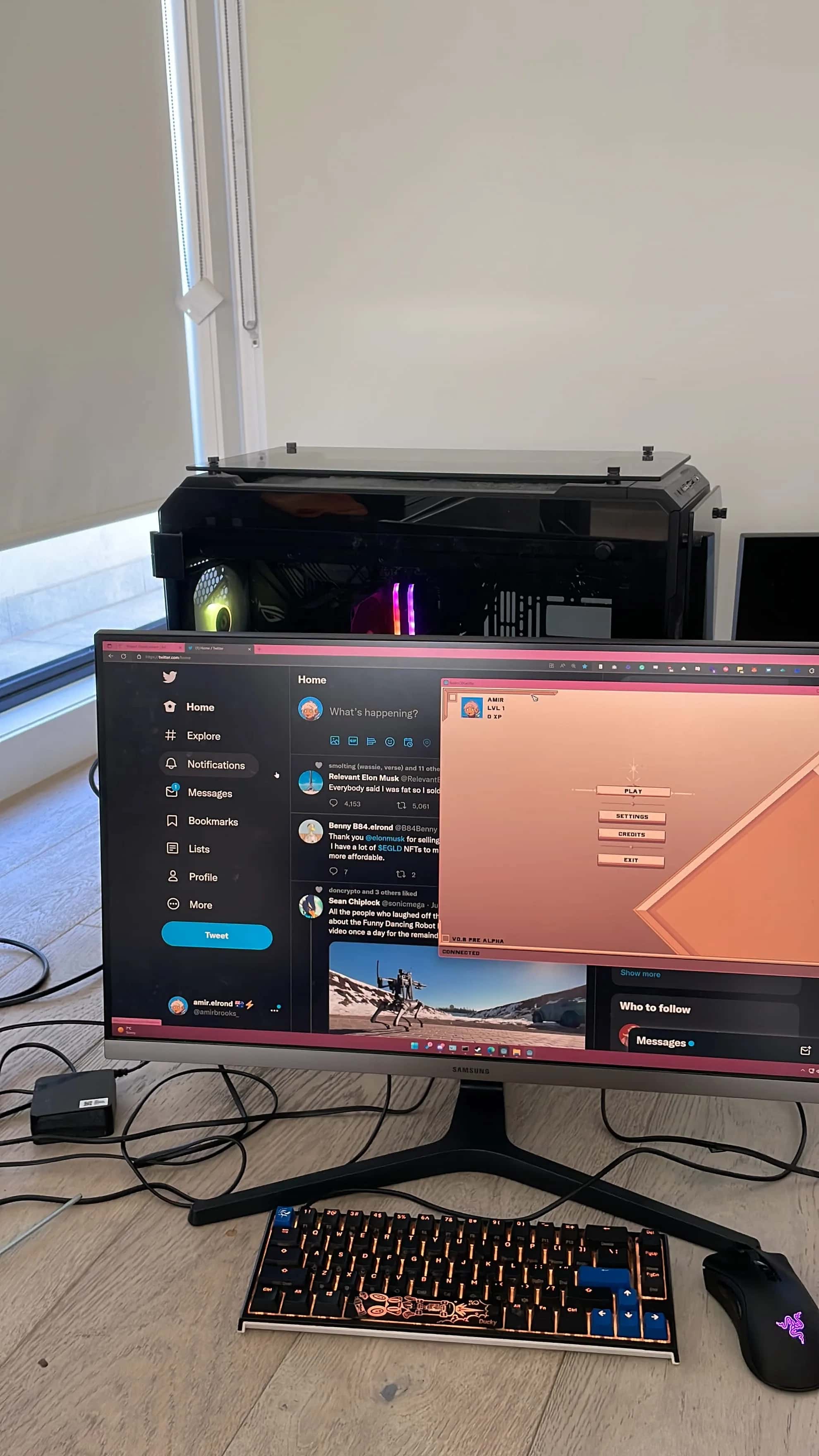
The first iteration of Karitha built significant game systems including a complete multiplayer housing framework, item placement mechanics, and social features. Despite the technical achievements, the project struggled to find players in an overcrowded market dominated by broken discovery systems. The key lesson: no amount of quality game development matters if players can't discover your game. This experience became the foundation for NextGame's approach to solving game discoverability.
Rather than immediately rebuilding, the project entered a strategic analysis phase. This period focused on understanding why game discovery was broken, studying the convergence of semantic search technology and AI, and designing NextGame as the infrastructure layer that should have existed before launching Karitha. The decision to pause rather than persist demonstrated mature product thinking: sometimes building the infrastructure is more valuable than shipping the product.

One of Karitha's most complete systems is the multiplayer housing framework, consisting of 6 core components: HousingManager (central operations controller), HousingData (complete data structures), PlacedItem (interactive items with collision), HouseLevel (scene management), HouseAccessManager (permissions), and HouseMusicManager (synchronized playback). The system demonstrates multiplayer game development patterns with real-time synchronization, access control, and save/load functionality.
Karitha's revival is planned for Q1 2026, timed with NextGame's infrastructure completion. Rather than competing for attention in a broken market, the revived Karitha will launch as the centerpiece demonstration of what's possible when discovery infrastructure exists from day one. The game will showcase semantic search capabilities, demonstrate infrastructure-first development, and prove the viability of the NextGame platform for other indie developers.
Built in Godot with an event-driven architecture, Karitha uses an EventBus pattern for loose coupling between systems. Network communication employs a pipe-delimited message protocol for efficient multiplayer synchronization. Data persistence leverages JSON with atomic saves to prevent corruption. The modular design allows individual systems (housing, inventory, social) to be developed and tested independently while maintaining cohesive multiplayer functionality.
Karitha's revival is intrinsically linked to NextGame's discovery platform. The game is being designed to leverage semantic search from launch, allowing players to discover it through natural language queries like 'cozy multiplayer housing games' or 'social RPGs with building mechanics'. This integration demonstrates the value proposition for other indie developers: by building on NextGame's infrastructure, games gain discoverability without individual marketing budgets.
The project is currently in strategic holding, waiting for NextGame's Q1 2026 infrastructure completion. The existing housing system and technical architecture are preserved and documented. The roadmap includes enhanced inventory systems, NPC shop mechanics, comprehensive save/load functionality, expanded social features, and full integration with NextGame's semantic discovery platform. All development is being documented openly to help other indie developers learn from both the failures and the revival.
Karitha embraces radical transparency. The project's history, technical implementations, and strategic decisions will be fully open-sourced. This transparency serves multiple purposes: it builds trust with the gaming community, provides learning resources for other indie developers, demonstrates NextGame's potential, and proves that failure followed by intelligent adaptation is more valuable than superficial success stories.